

As we move into 2026, modern kitchen design continues to evolve beyond stark minimalism and trend-driven aesthetics. Today’s kitchens are warmer, more intentional, and designed to support how people actually live. At the heart of this shift are modern kitchen cabinets, which shape everything from layout and storage to durability and visual balance.
In design-forward Silicon Valley communities like Palo Alto and its surrounding areas, homeowners are increasingly prioritizing modern kitchens that balance clean design with long-term livability. From architectural influences and sculptural islands to refined materials and concealed storage, the modern kitchen trends of 2026 focus on longevity, function, and thoughtful design.
Whether you’re planning a full kitchen remodel or gathering inspiration for the future, these are the top 8 modern kitchen trends to look out for in 2026, revealed through the kitchens we’ve designed and delivered across Silicon Valley, where we see firsthand which design directions are shaping high-end homes.
Strategic Use of Wood
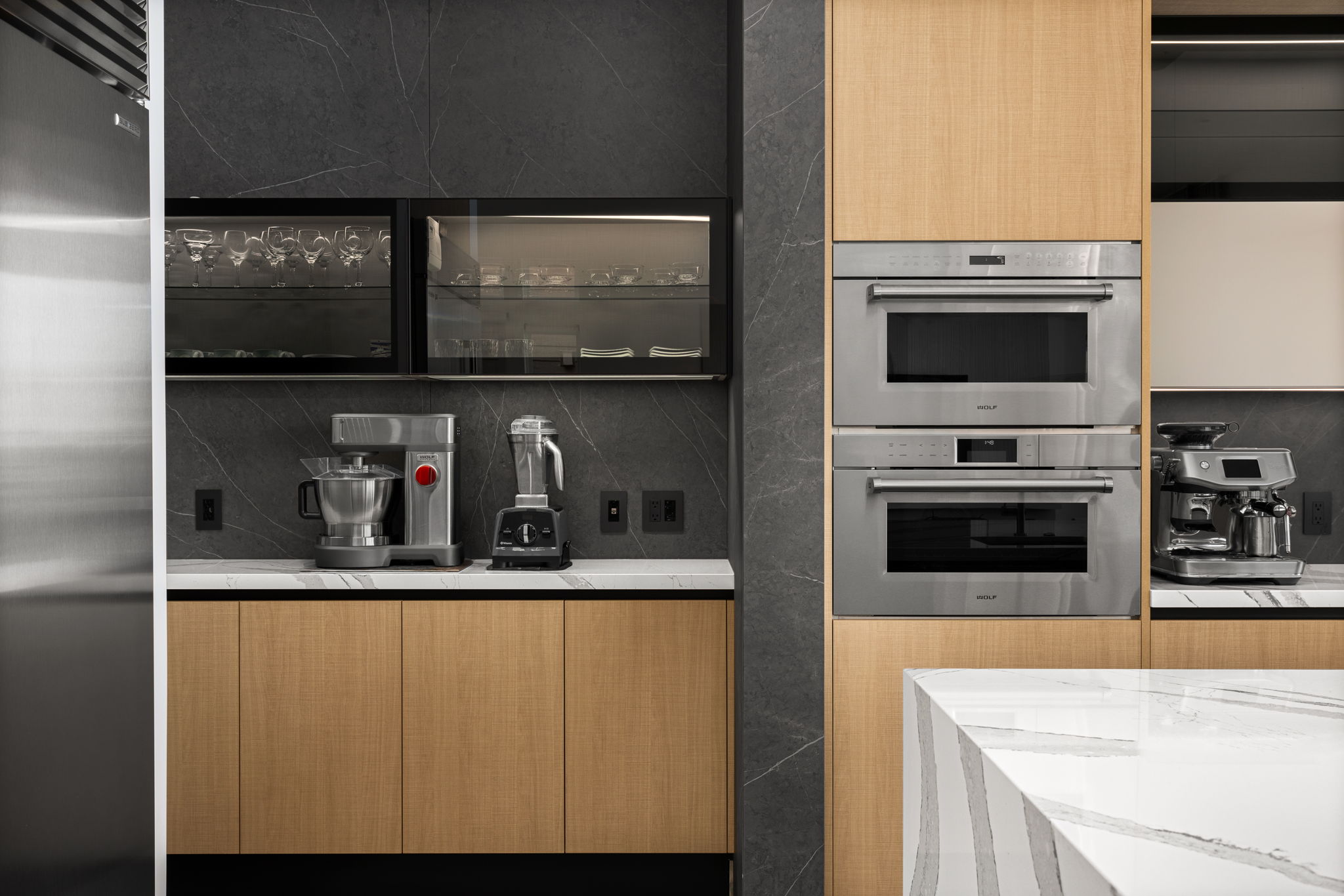
Strategic use of wood in a Foster City kitchen remodel, where warm cabinetry anchors the space while stone and integrated appliances remain intentionally understated.
Warm wood remains essential in modern kitchen design, but its application in 2026 is more selective. Instead of appearing everywhere, wood is used strategically to anchor key elements, base cabinets, islands, or tall storage, while surrounding surfaces remain quieter.
Across recent San Francisco Bay Area projects, this restraint creates depth without overwhelming the space. When paired with stone, glass, or matte lacquer, wood feels architectural rather than decorative.
Hidden Prep Kitchens & Butler’s Pantries
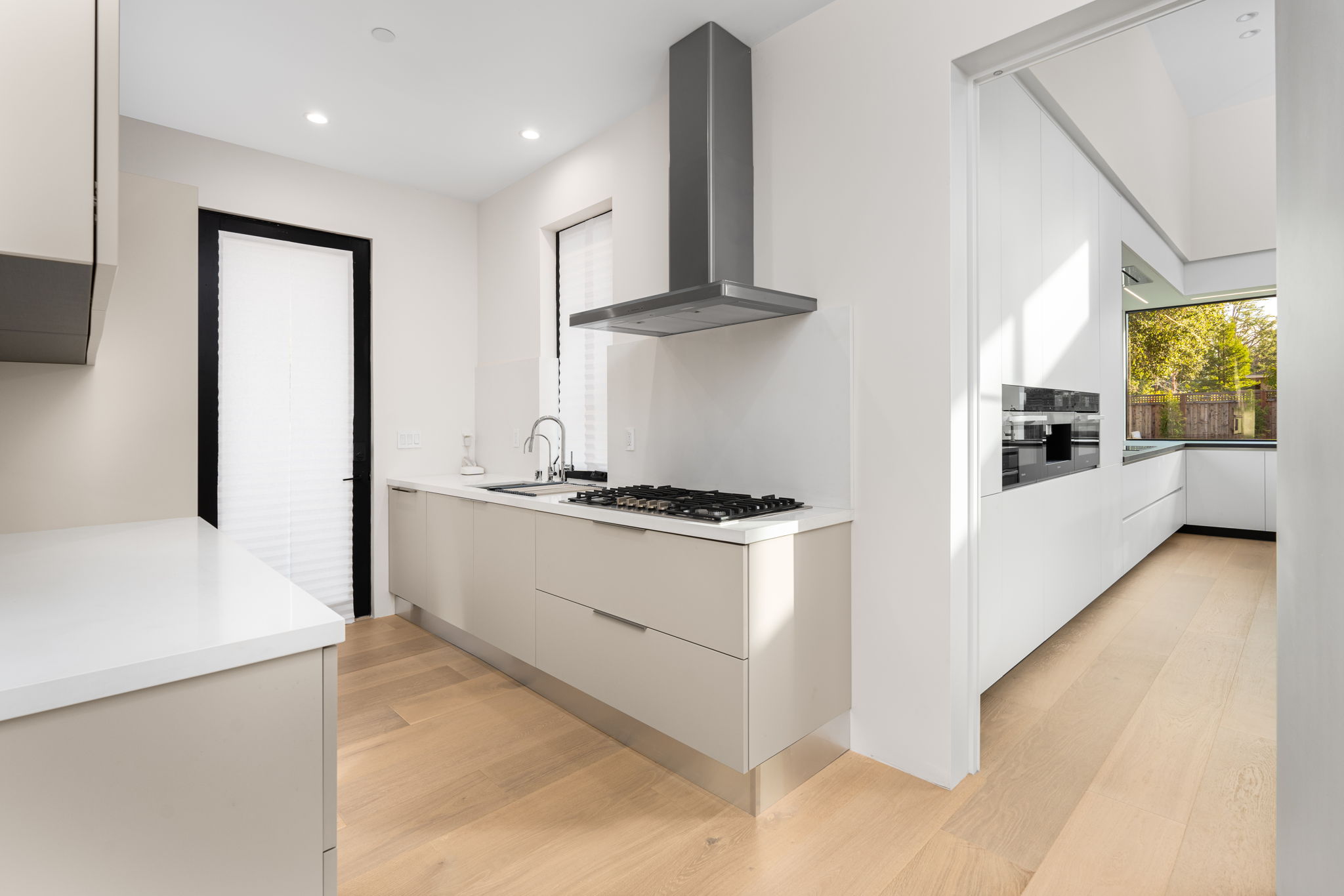
A hidden prep kitchen in a Los Altos home allows daily cooking to happen out of sight, keeping the primary kitchen calm, clean, and visually refined.One of the clearest shifts defining 2026 is the rise of the hidden prep kitchen, often referred to as a butler’s pantry. Rather than asking the main kitchen to handle every task, homeowners are separating visual design from daily function.
Across high-end homes in Woodside and Portola Valley, these secondary kitchens are tucked just behind the primary space and fully equipped for everyday cooking, cleanup, and appliance storage. This layered approach allows the main kitchen to remain visually refined while still supporting how people actually live.
Concealed Appliances & Appliance Garages
Concealed appliances and integrated cabinetry allow this Mountain View kitchen to read as architectural rather than utilitarian, creating a clean and intentional modern space.
Modern kitchens in 2026 are increasingly designed to visually disappear when not in use. Integrated refrigerators, appliance garages, and concealed coffee or cooking zones allow the space to read as architectural rather than utilitarian.
In many Silicon Valley homes, cabinetry is planned to hide everyday appliances behind continuous fronts, reducing visual noise while preserving full functionality. This approach reflects a broader shift toward kitchens that feel intentional, calm, and seamlessly integrated into the home.
Task-Zoned Kitchens (Designing for How People Actually Use the Space)
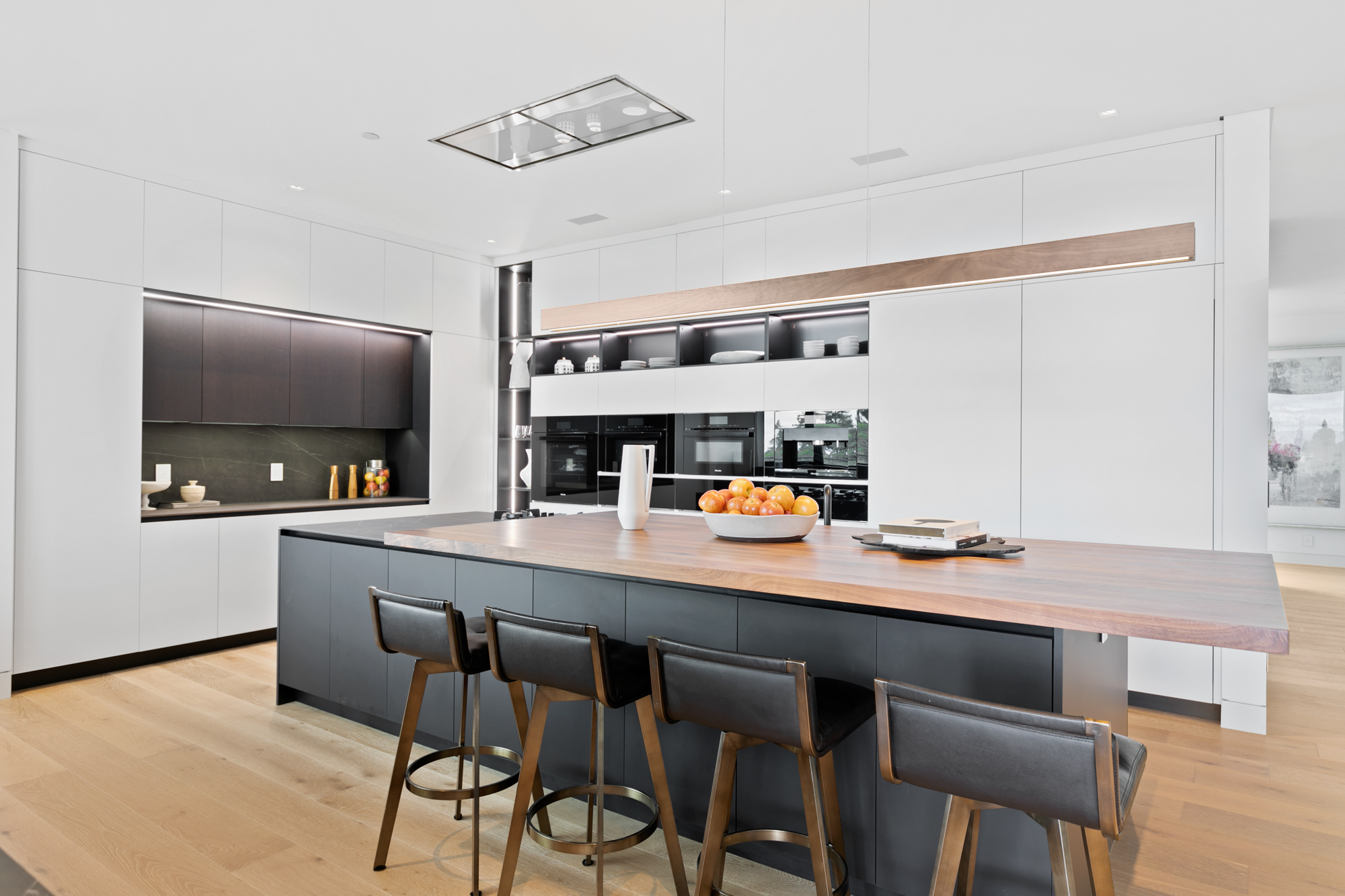
This task-zoned kitchen in a Hillsborough home separates cooking, prep, and entertaining into clearly defined areas, allowing the space to function intuitively without visual clutter.
While large kitchens may still feature multiple islands or surfaces, the defining trend in 2026 is zoning, not size. Kitchens are being planned around distinct functions: prep, cooking, dining, entertaining, and even working from home.
Custom modern kitchen cabinets play a key role in establishing these zones while maintaining visual continuity. Storage, appliances, and circulation are thoughtfully distributed, creating kitchens that function smoothly for multiple activities without feeling cluttered or oversized.
Architecture-Led Kitchens
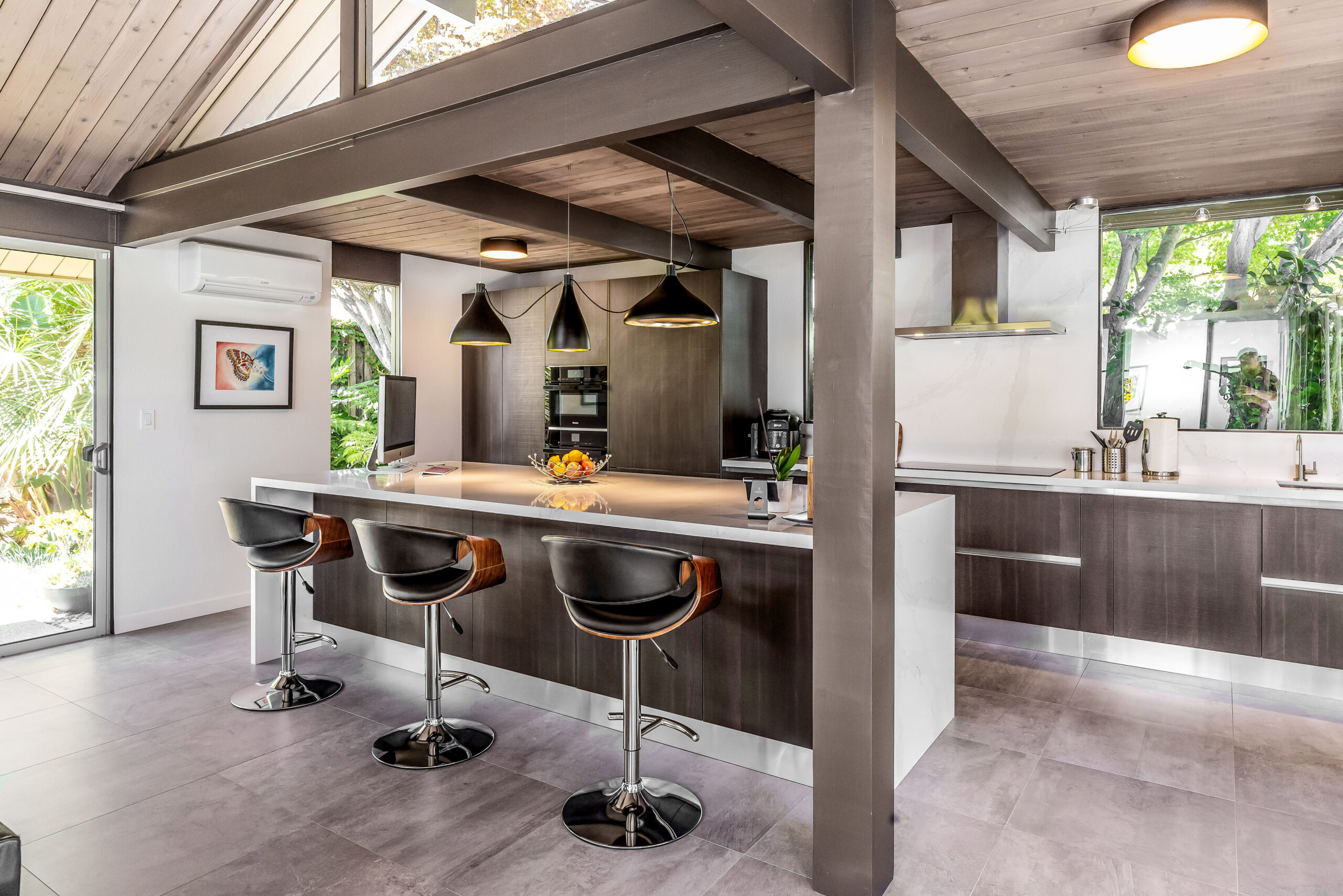
In this Sunnyvale Eichler remodel, the kitchen design is led by the home’s architecture, allowing exposed beams, natural light, and clean-lined cabinetry to define the space.
In 2026, modern kitchens are increasingly designed to support the architecture rather than dominate it. This shift toward architecture-led kitchens mirrors broader design movements highlighted by publications like Architectural Digest and Dezeen, where restraint and longevity are increasingly prioritized. Instead of cabinetry acting as the focal point, clean-lined systems are used to reinforce ceiling heights, window geometry, and spatial proportions.
In design-forward Silicon Valley homes,particularly in Palo Alto and Los Altos, we’re seeing kitchens where flat-panel, integrated cabinetry allows exposed beams, natural light, and architectural details to take center stage. The result is a kitchen that feels calmer, more cohesive, and deeply connected to the home itself.
Kitchens Designed Around Natural Light
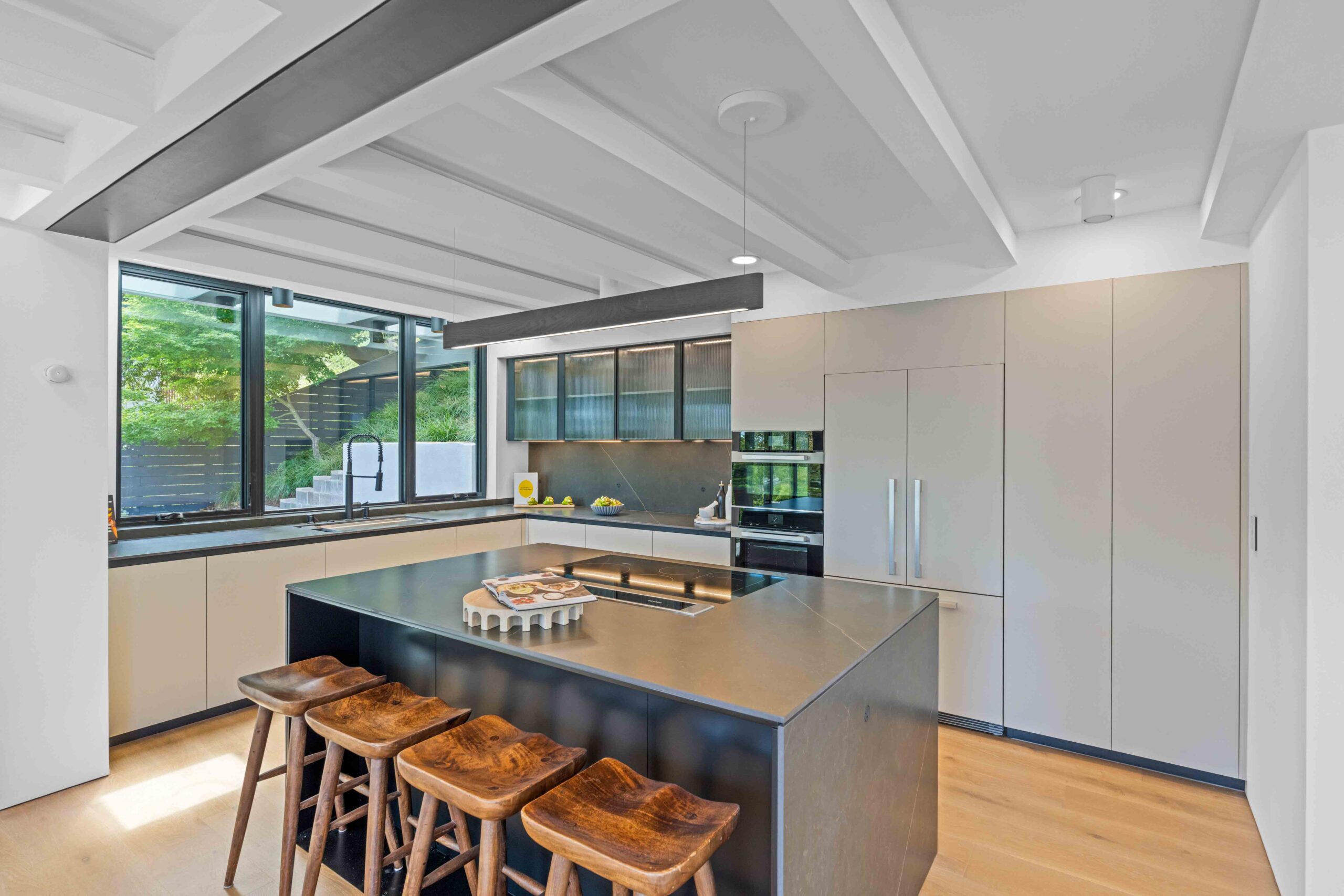
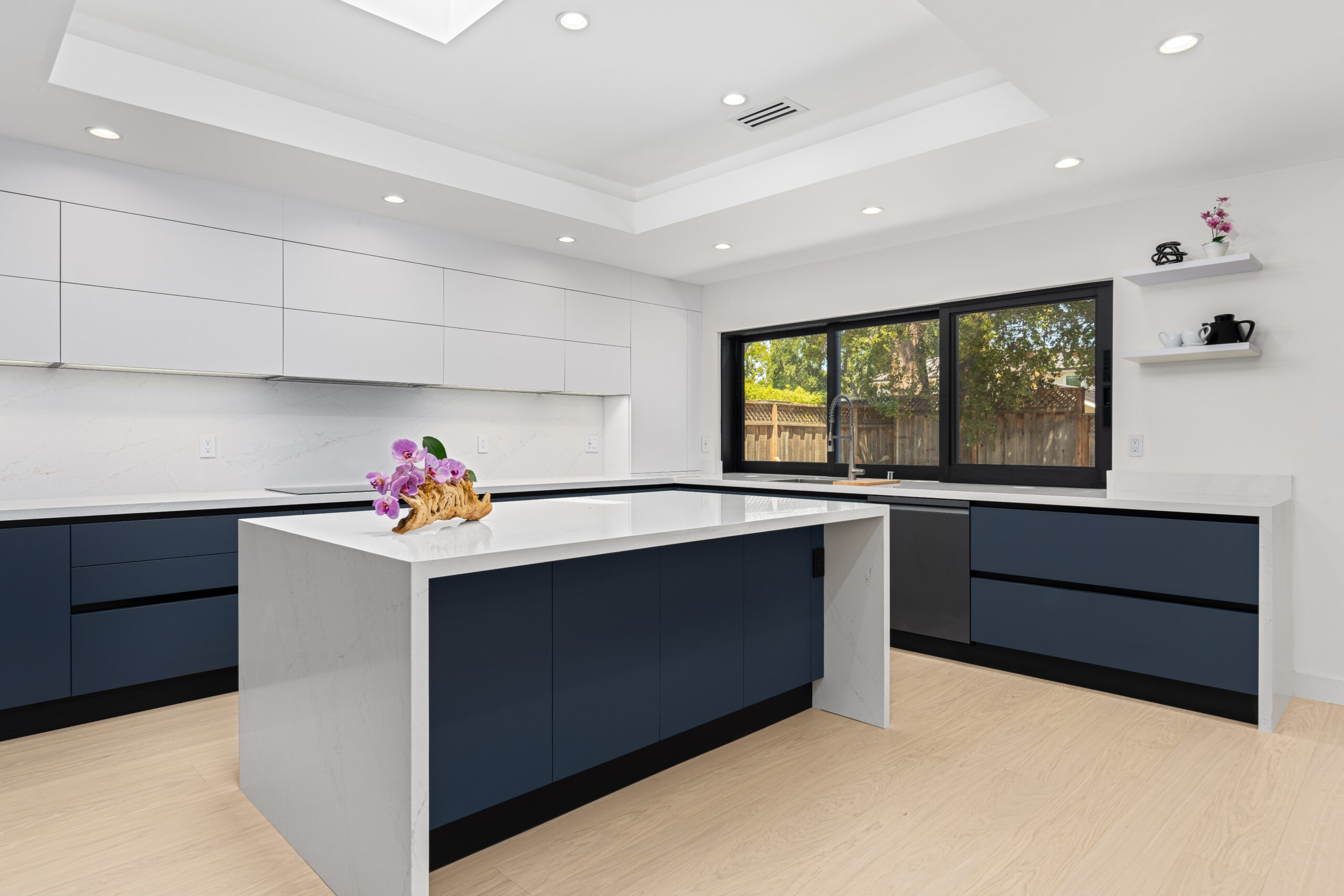
This modern kitchen is designed around natural light, with cabinetry and storage carefully positioned to frame expansive windows and preserve openness throughout the space.
Natural light remains a cornerstone of modern kitchen design, but the planning philosophy has shifted. In 2026, cabinetry is designed around windows, skylights, and views, not the other way around.
Full-height cabinets are carefully positioned to frame light rather than block it, allowing daylight to define the space. This approach feels especially relevant in regions where indoor-outdoor living is part of everyday life.
Islands as Architectural Objects
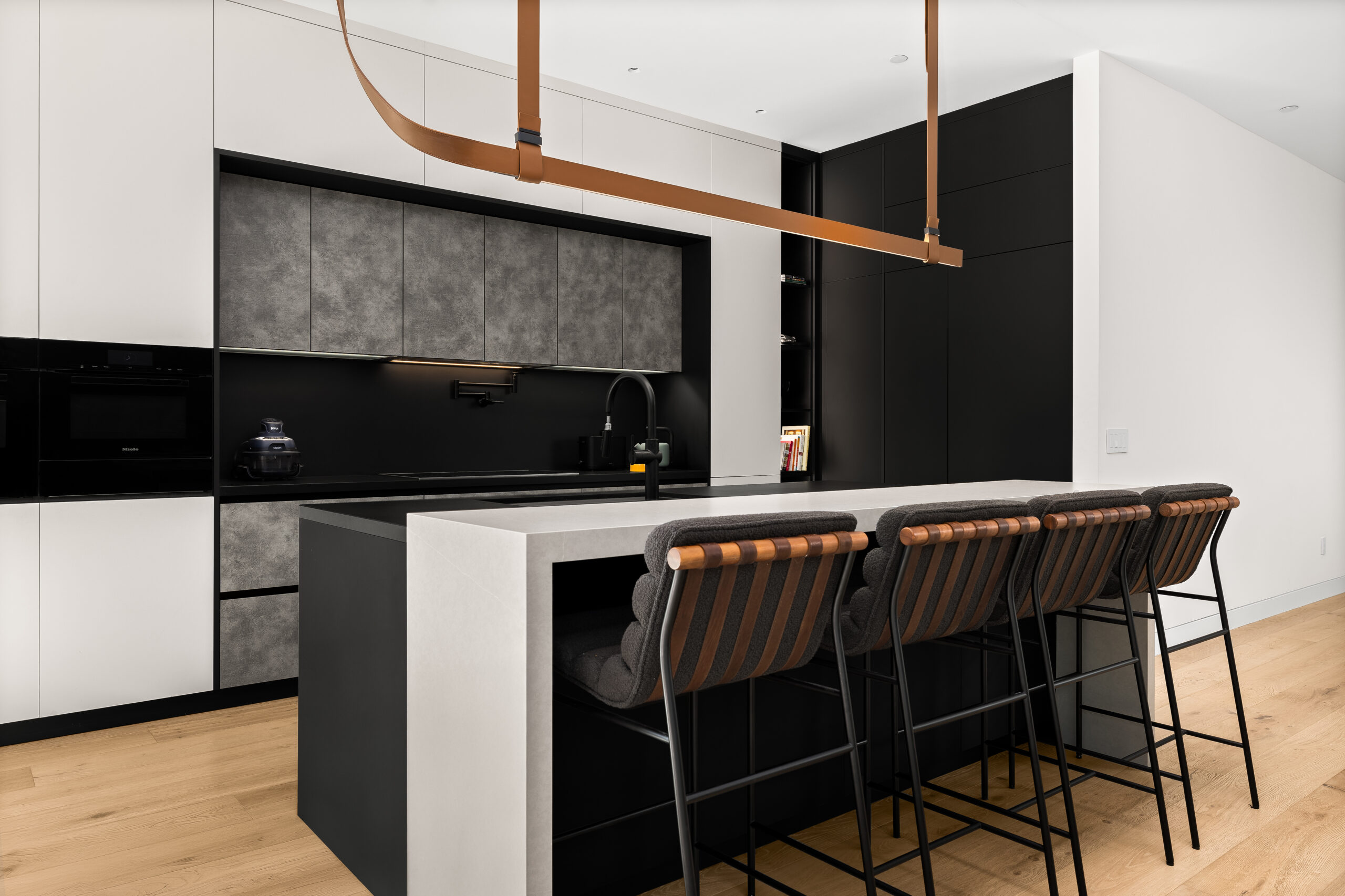
In this Los Gatos home, the kitchen island is treated as an architectural object, using bold form and material contrast to anchor the entire space.
Kitchen islands are no longer just functional hubs, they’re treated as architectural elements with mass, proportion, and permanence. Thicker countertop profiles, sculptural forms, and continuous materials give islands a grounded presence.
Surrounding cabinetry is often kept understated, allowing the island to anchor the space visually without overwhelming the overall design.
Refined Veining & Tonal Stone Continuity
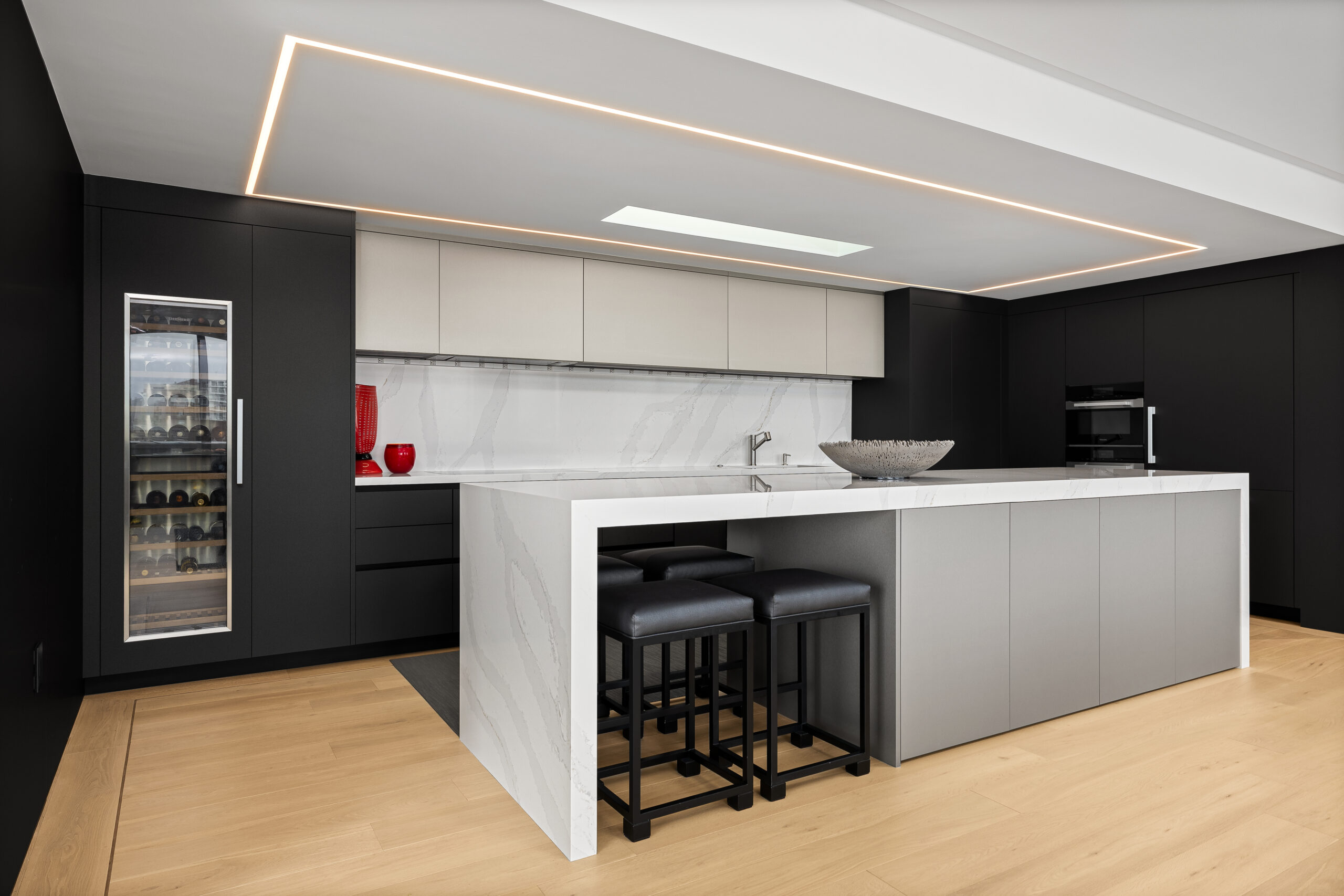
Modern black-and-white kitchen with refined stone veining and a waterfall island, showcasing tonal stone continuity and integrated cabinetry in San Francisco.
Veined stone continues to define modern kitchens in 2026, but the expression is noticeably more restrained. Rather than dramatic, high-contrast movement, homeowners are opting for softer veining that flows consistently across countertops, backsplashes, and waterfall edges without overpowering the space.
This tonal continuity allows stone to remain present throughout the kitchen while feeling calm and cohesive. When paired with clean-lined modern kitchen cabinets, subtle veining adds depth and texture without becoming the focal point, resulting in kitchens that feel layered, timeless, and visually balanced rather than trend-driven.
Conclusion
Modern kitchen trends in 2026 focus less on novelty and more on thoughtful, well-designed spaces that support everyday life. From architectural influences and warm materials to functional layouts and refined cabinetry, today’s kitchens are designed to evolve with you.
By prioritizing high-quality modern kitchen cabinets, smart storage, and timeless materials, your kitchen can remain relevant and beautiful for years to come, no matter how trends shift.
FAQ: Modern Kitchen Trends & Cabinets in the Bay Area
What are the most popular modern kitchen trends in the Bay Area for 2026?
In design-forward areas like San Francisco Bay Area and Silicon Valley, modern kitchen trends for 2026 focus on warmth, functionality, and longevity. Homeowners are prioritizing clean-lined modern kitchen cabinets, layered natural materials, functional islands, and layouts that support everyday living and entertaining. Rather than overly bold statements, the emphasis is on timeless design choices that add long-term value.
How do modern kitchen cabinets impact a kitchen remodel?
Modern kitchen cabinets are one of the most important elements of any remodel. Cabinetry defines the kitchen’s layout, storage efficiency, appliance integration, and overall aesthetic. In Bay Area remodels, homeowners often choose flat-panel or handleless cabinet designs with flexible interior storage systems to create kitchens that feel streamlined, functional, and modern.
Are European kitchen cabinets a good choice for Bay Area homes?
Yes. European kitchen cabinets are especially well-suited for Bay Area homes because they are designed as adaptable systems rather than fixed boxes. These cabinets offer precise construction, integrated appliances, and customizable storage, making them ideal for modern kitchen remodels in places like Palo Alto, Los Altos, and surrounding communities where clean design and performance matter.
What kitchen design trends work best for Silicon Valley lifestyles?
In Silicon Valley, kitchen design trends that emphasize natural light, indoor-outdoor flow, and multi-functional spaces tend to work best. Full-height modern kitchen cabinets, large islands, and integrated storage help support busy households while maintaining a clean, contemporary look that fits the local lifestyle.
When should I start planning a kitchen remodel in the Bay Area?
Most homeowners should begin planning a kitchen remodel 6–12 months in advance. This allows time to explore modern kitchen trends, select the right modern kitchen cabinets, and coordinate materials, especially when working with custom or European cabinetry, which often requires longer lead times.
How do I choose the right modern kitchen design for my home?
The best modern kitchen design balances aesthetics with how you actually live. Storage needs, natural light, cooking habits, and long-term plans all play a role in shaping the right layout and material choices. Working with a design team that not only understands modern kitchen cabinets but also has experience designing and delivering kitchens in your local context helps ensure the result feels cohesive, functional, and built to last.