

Building an outdoor kitchen is more than choosing appliances, the material for outdoor kitchen cabinets will determine how well your space performs, ages, and handles weather. Outdoor cabinets are constantly exposed to moisture, heat, UV rays, and temperature swings. Choosing the right outdoor kitchen cabinet materials ensures that your setup stays beautiful, functional, and safe year after year.
Today, outdoor kitchens are seen as true extensions of the home. And just like an indoor kitchen needs reliable cabinetry, your outdoor space deserves materials that can handle the elements without compromising style or performance.
What to Consider When Selecting Outdoor Kitchen Cabinet Materials
Before choosing the best material for outdoor kitchen cabinets, think about:
- Weather exposure: humidity, rain, direct sun, snow, salt air
- Cooking environment: proximity to grills, heat output, grease
- Maintenance needs: how often you want to clean or reseal surfaces
- Durability: resistance to warping, fading, corrosion, and impact
- Design: appearance, finishes, and integration with outdoor décor
These factors help narrow down which materials will work best in your climate and lifestyle.
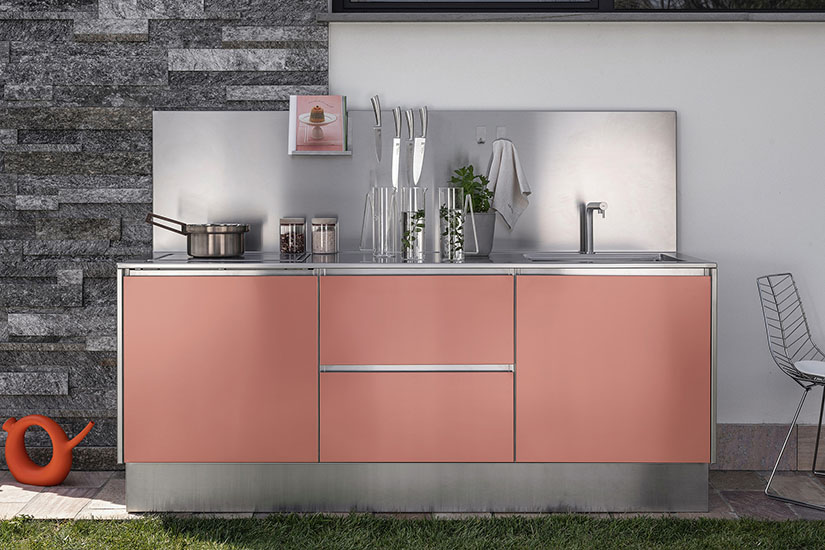
Comparing Popular Outdoor Kitchen Cabinet Materials
1. Stainless Steel – The Gold Standard
Stainless steel is widely considered the best material for outdoor kitchen cabinets, especially in professional-grade and high-performance designs.
Why it’s a top choice:
- Resists corrosion, rust, and extreme temperatures
- Non-porous and hygienic, no bacteria absorption
- Easy to clean and maintain
- Modern, high-end appearance
- Ideal around grills, cooktops, or hot appliances
Not all stainless steel is equal. Premium manufacturers like Abimis use AISI 316 stainless steel, which offers superior resistance in coastal, humid, or chlorine-rich environments, perfect for outdoor spaces near pools or oceans.
This makes Abimis outdoor kitchens exceptionally strong, durable, and built to last in conditions where other materials may fail.
2. Aluminum
Aluminum is another commonly used outdoor kitchen cabinet material.
Pros:
- Lightweight and rust-resistant
- Generally more budget-friendly
- Easy to install
Cons:
- More prone to denting
- Lower heat resistance
- Can scratch more easily than stainless steel
It’s a good option for mild climates, but not ideal right next to a grill or high-heat appliance.
3. HDPE / Marine-Grade Polymer
HDPE cabinets are known for being maintenance-friendly and weather-resistant.
Advantages:
- Waterproof and UV-resistant
- Won’t rot or warp
- Available in many colors
Limitations:
- Lower heat resistance
- Can look less premium than metal options
Great for humid or rainy environments where moisture is the main concern.
4. Wood
Wood offers a natural, warm aesthetic, but it’s the highest-maintenance option.
Pros:
- Beautiful, timeless appearance
- Easy to customize
Cons:
- Requires sealing and regular maintenance
- Can warp, rot, or fade over time
- Not ideal near heat sources
Wood works best in covered or semi-protected outdoor areas.
5. Masonry / Stone / Concrete
Very durable and visually striking, stone or concrete cabinetry is often custom-built.
Benefits:
- Extremely heat-resistant
- Sturdy and long-lasting
- Ideal for fixed outdoor installations
Drawbacks:
- Heavy and difficult to modify
- Requires professional installation
- Limited flexibility once built
Perfect for permanent outdoor kitchens with built-in appliances.
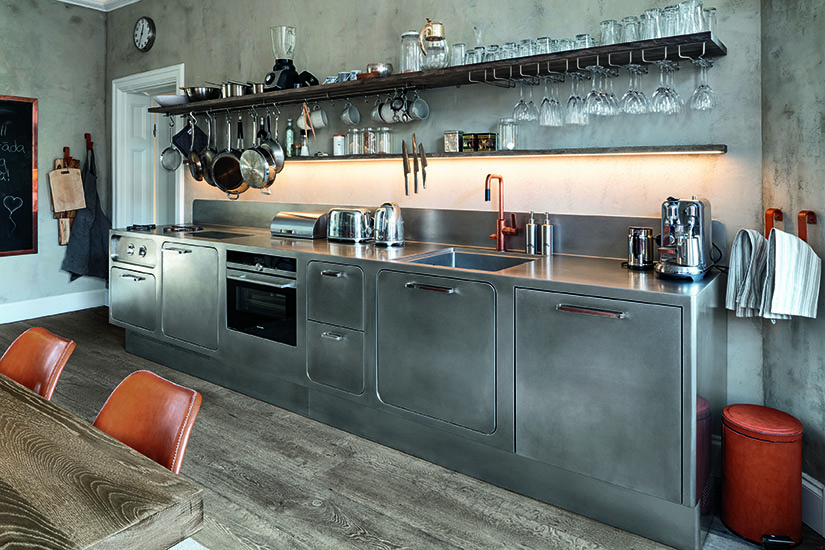
Why Stainless Steel and Abimis Often Wins
Taking all materials into account, stainless steel continues to shine as the best material for outdoor kitchen cabinets, especially in homes where performance and longevity matter.
But what sets Abimis apart?
Professional-Grade Stainless Steel (AISI 316)
Abimis uses marine-grade 316 stainless steel, a top-tier alloy engineered for extreme environments. It resists salt air, humidity, chlorine, and chemical exposure better than standard grades.
Seamless, Hygienic Design
Abimis outdoor kitchens are crafted with joint-free worktops, integrated sinks, and smooth, rounded corners. This eliminates gaps where dirt and bacteria typically gather, making cleaning effortless.
Custom Modular Solutions
Abimis outdoor kitchens are fully customizable: modules, finishes, appliances, and layouts can be tailored to any space, large or compact.
Made in Italy, Built to Last
Each Abimis kitchen is handcrafted by skilled Italian artisans, ensuring unmatched quality, performance, and durability.
Designed for Real Outdoor Life
From hosting big gatherings to intimate dinners, Abimis kitchens deliver the functionality of an indoor kitchen with the resilience required outdoors.
If you want a premium outdoor kitchen that stays beautiful for decades, Abimis stainless steel cabinets offer a level of engineering and craftsmanship that goes beyond ordinary materials.
How to Choose the Right Outdoor Kitchen Cabinet Material for Your Lifestyle
Ask yourself:
- Do you want low-maintenance materials?
- Do you entertain frequently?
- Is your kitchen near a grill, pool, or ocean?
- Do you prefer a modern or natural design?
- How long do you want your outdoor kitchen to last?
If your goal is maximum durability, effortless cleaning, and a modern aesthetic, stainless steel, especially from Abimis, is the top option.
Conclusion
There are many outdoor kitchen cabinet materials, but stainless steel remains the leading choice for performance, longevity, hygiene, and design versatility. When combined with expert craftsmanship like Abimis provides, you get an outdoor kitchen that performs like a professional workspace, withstands the elements, and looks stunning year after year.
Make an appointment to visit our Palo Alto showroom