

When homeowners compare Italian kitchen cabinets with American cabinets, the difference is often reduced to style. Italian cabinets are seen as sleek and modern, while American cabinets are often viewed as more traditional. That is partly true, but it is too simple.
The real difference is not only about appearance. It is also about cabinet construction, manufacturing method, storage access, finishes, hardware, and how the kitchen is planned as a complete system.
Italian cabinetry is usually part of the broader category of European kitchen cabinets. These kitchens are often designed with a cleaner, more architectural look, using flat doors, hidden hardware, integrated appliances, and precise factory-made components. American cabinets, on the other hand, are often built around more traditional cabinet structures, visible frames, and familiar door styles such as Shaker or raised-panel designs.
Both can work well. The better choice depends on the type of home, the design goal, the budget, and how much importance you place on storage, finish consistency, and modern detailing.
What Are European Kitchen Cabinets?
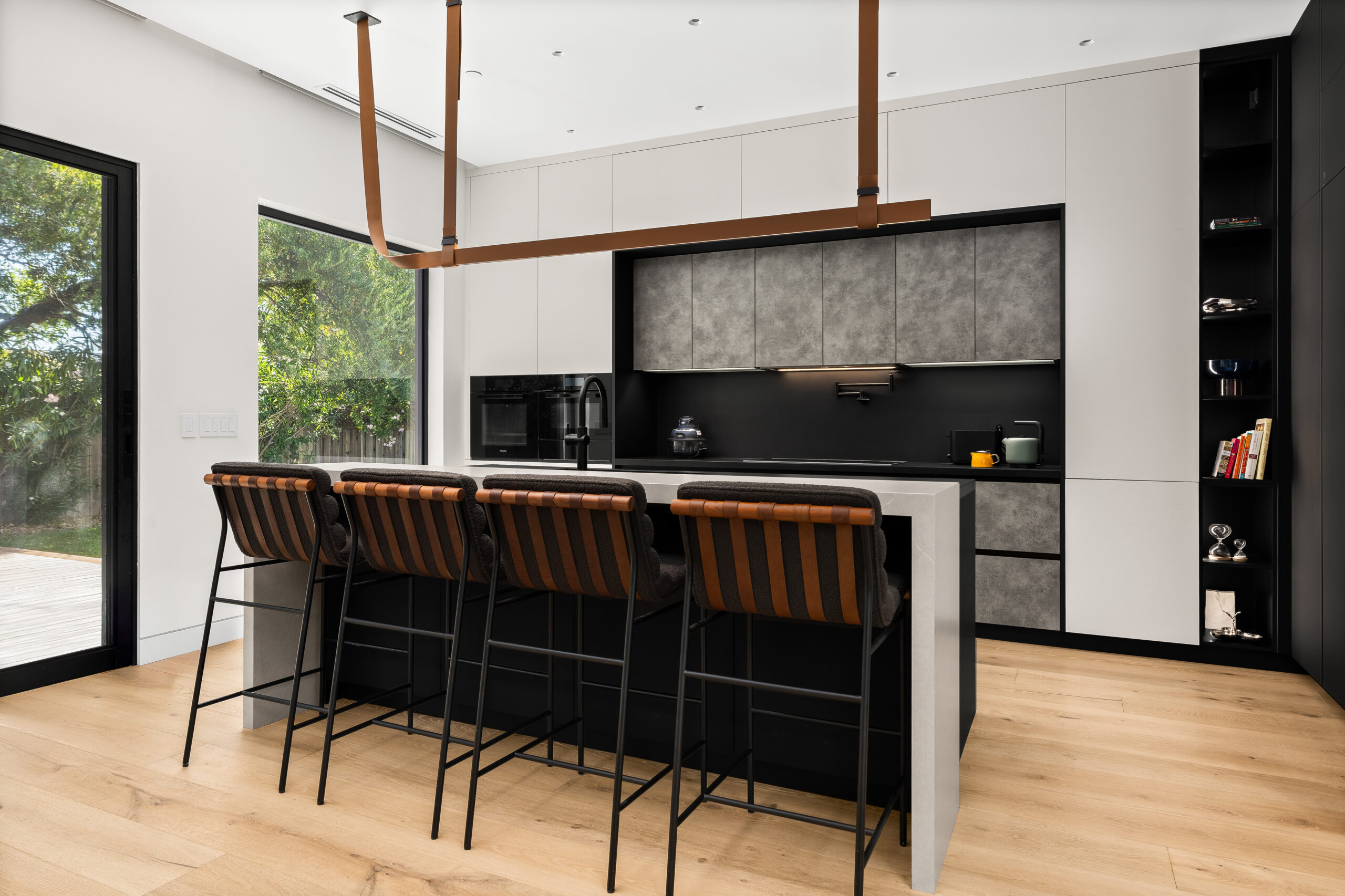
European kitchen cabinets are usually known for their frameless construction, clean lines, and efficient use of space. Instead of using a front face frame around the cabinet box, many European systems use a frameless structure. This gives the cabinet a more seamless look and allows wider drawer and door openings.
This style is common in Italian kitchens, where the cabinets are often designed as part of a complete room concept. The cabinetry, countertops, wall units, appliances, lighting, and finishes are planned together rather than treated as separate pieces.
European cabinetry often works well in modern homes because it creates a more built-in and streamlined appearance. The look is usually simple, but not plain. The quality comes from the details: door alignment, finish depth, drawer movement, handle placement, and how the materials connect across the room.
What Are American Style Cabinets?
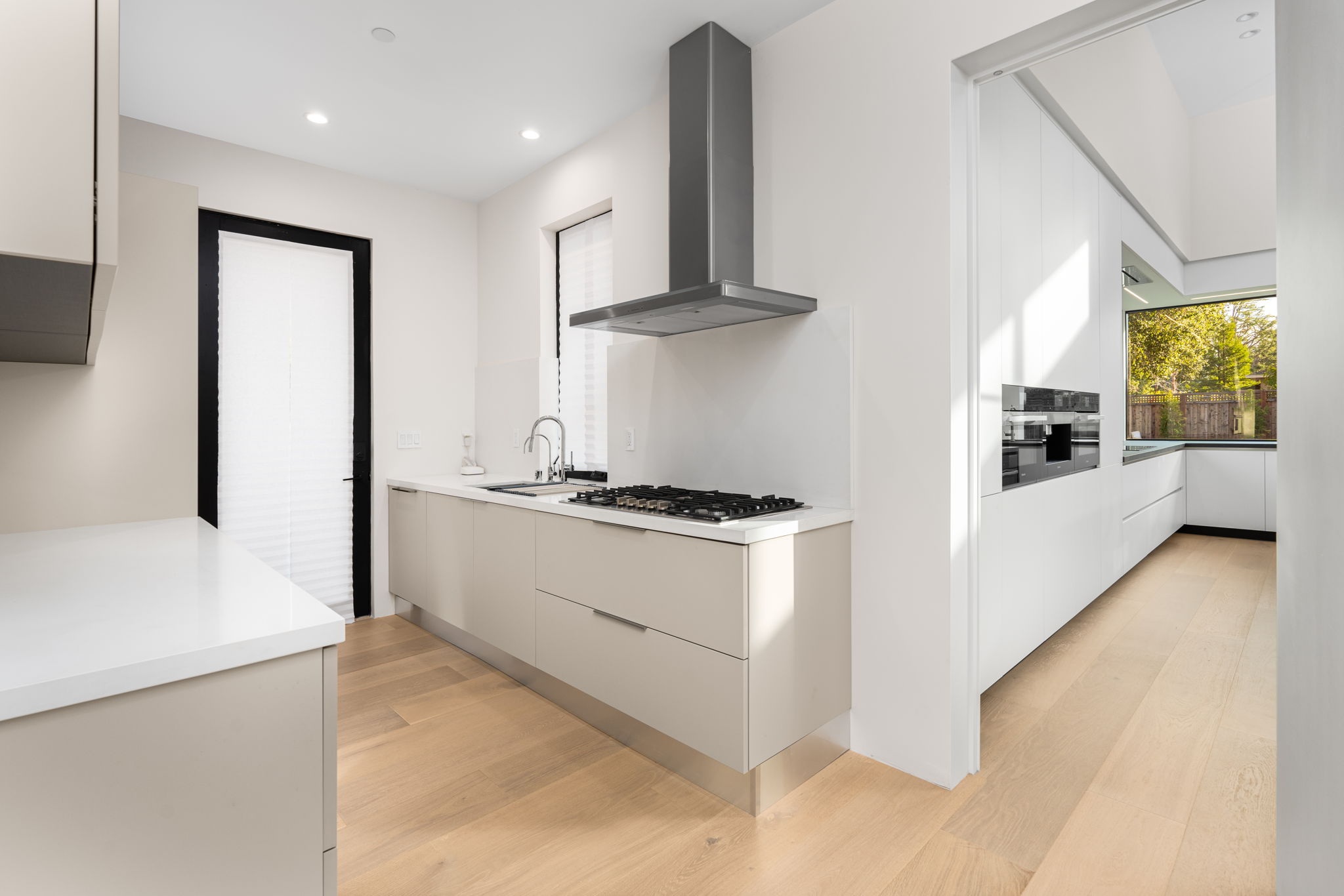
American style cabinets are often associated with framed cabinet construction. This means the cabinet box has a face frame attached to the front. Doors and drawers are then mounted onto or inside that frame.
This type of construction is common in many traditional and transitional kitchens. It works especially well with Shaker doors, inset doors, raised panels, decorative moldings, and painted wood finishes.
American cabinets can be custom-made, semi-custom, or stock. This gives homeowners many options, especially if they want a very specific size, a traditional layout, or a design that matches existing architectural details in the home.
However, American cabinetry can vary a lot depending on the cabinetmaker, materials, finish quality, and installation team. Some American cabinets are very high-end, while others are more basic. The category is broad, so it is important not to treat all American cabinets as the same.
Frameless vs Framed Cabinets: The Main Construction Difference
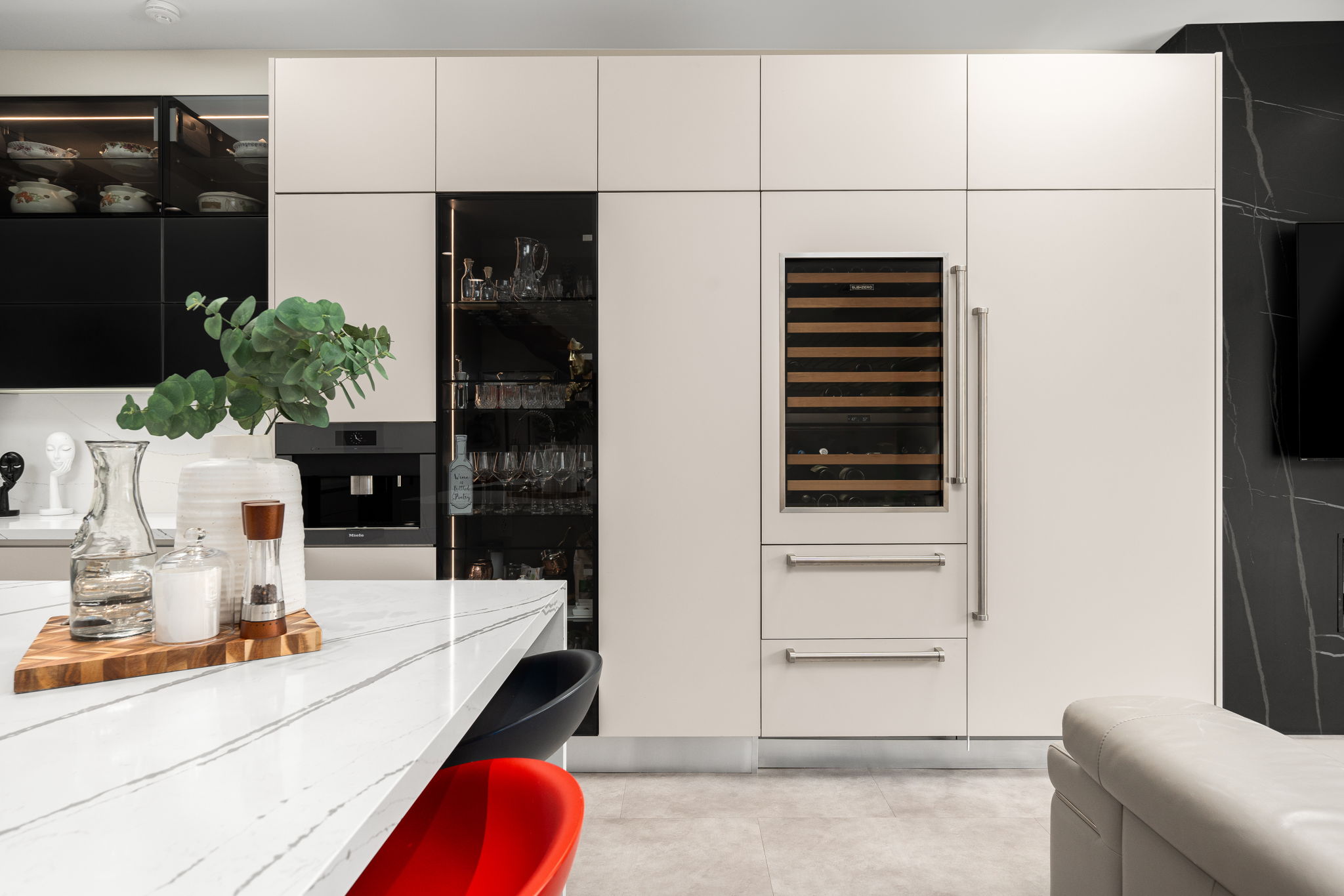
One of the most important technical differences is frameless vs framed cabinets.
Framed cabinets have a front frame attached to the cabinet box. This frame adds structure and creates the classic American cabinet look. It can also support traditional door styles, including inset and partial overlay doors.
Frameless cabinets do not have that front face frame. Instead, the cabinet box itself is built with thicker side panels and precise hardware. This is why frameless kitchen cabinets are often called full-access cabinets. The opening is wider, and the interior space is easier to reach.
This matters in everyday use. Frameless cabinets can make drawers feel wider and storage more accessible. In a compact kitchen, that small difference can be useful. It also supports the clean, flat, full-overlay look often seen in Italian and European kitchens.
Framed cabinets, however, can feel more familiar and traditional. They may be better for homeowners who want a classic kitchen with visible detailing, decorative elements, and a warmer residential feel.
Design Style: Clean European Lines vs Traditional American Details
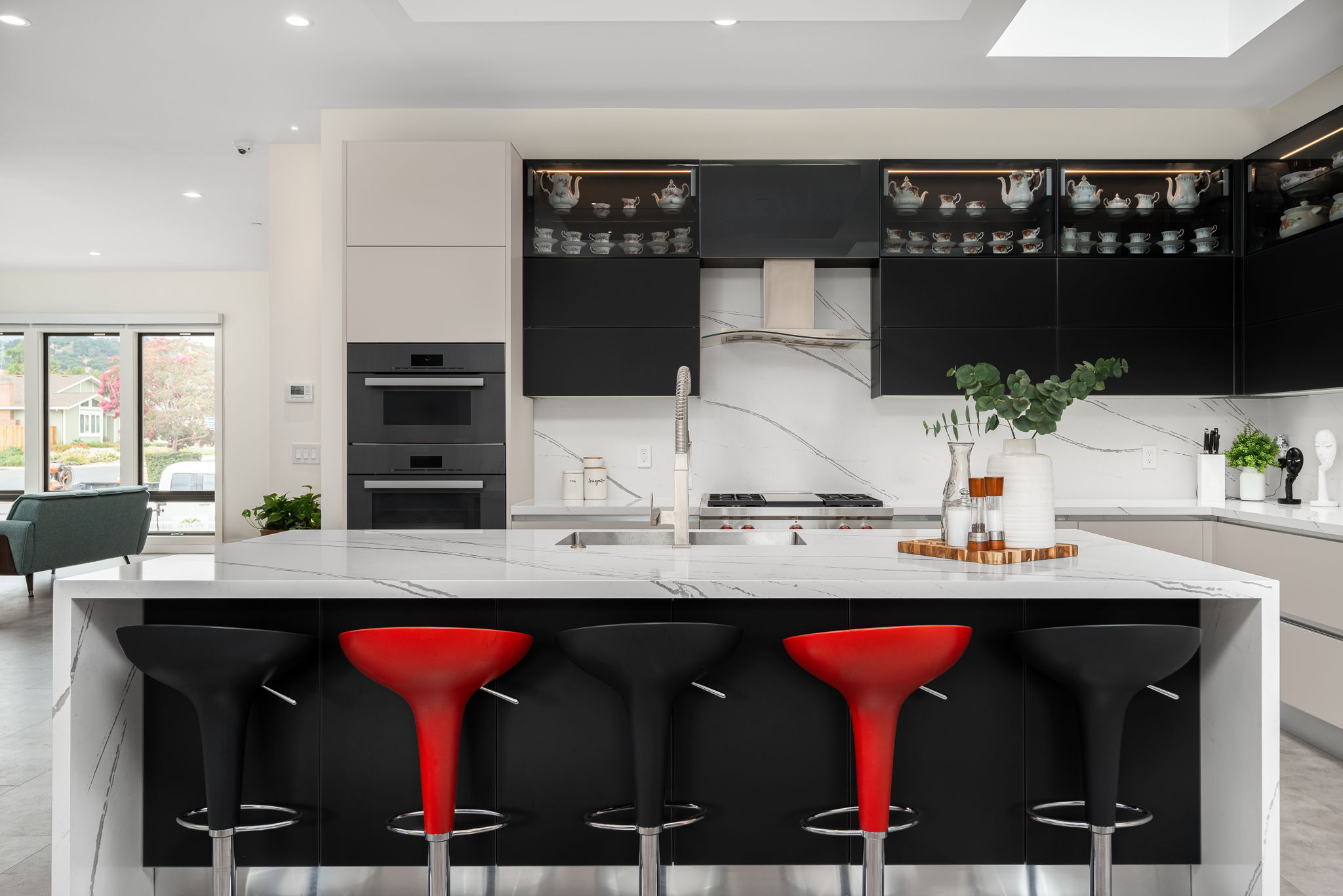
The visual difference is usually the first thing people notice.
European style kitchen cabinets often use flat-panel doors, slab fronts, hidden hinges, full overlays, handleless channels, and simple vertical or horizontal lines. The design focuses on proportion and material rather than decoration.
This is why modern Italian kitchen cabinets are popular in high-end remodels. They create a refined look without needing heavy trim or ornament. The kitchen feels calm, structured, and intentional.
American cabinets often have more visible detail. Shaker doors, framed openings, crown molding, island panels, and decorative hardware are common. These details can make the kitchen feel warmer and more traditional.
Neither style is automatically better. The issue is fit. If the home has a modern architectural style, European cabinets may feel more natural. If the home has traditional millwork, classic flooring, or a more historic interior, American cabinets may blend better.
Storage and Functionality
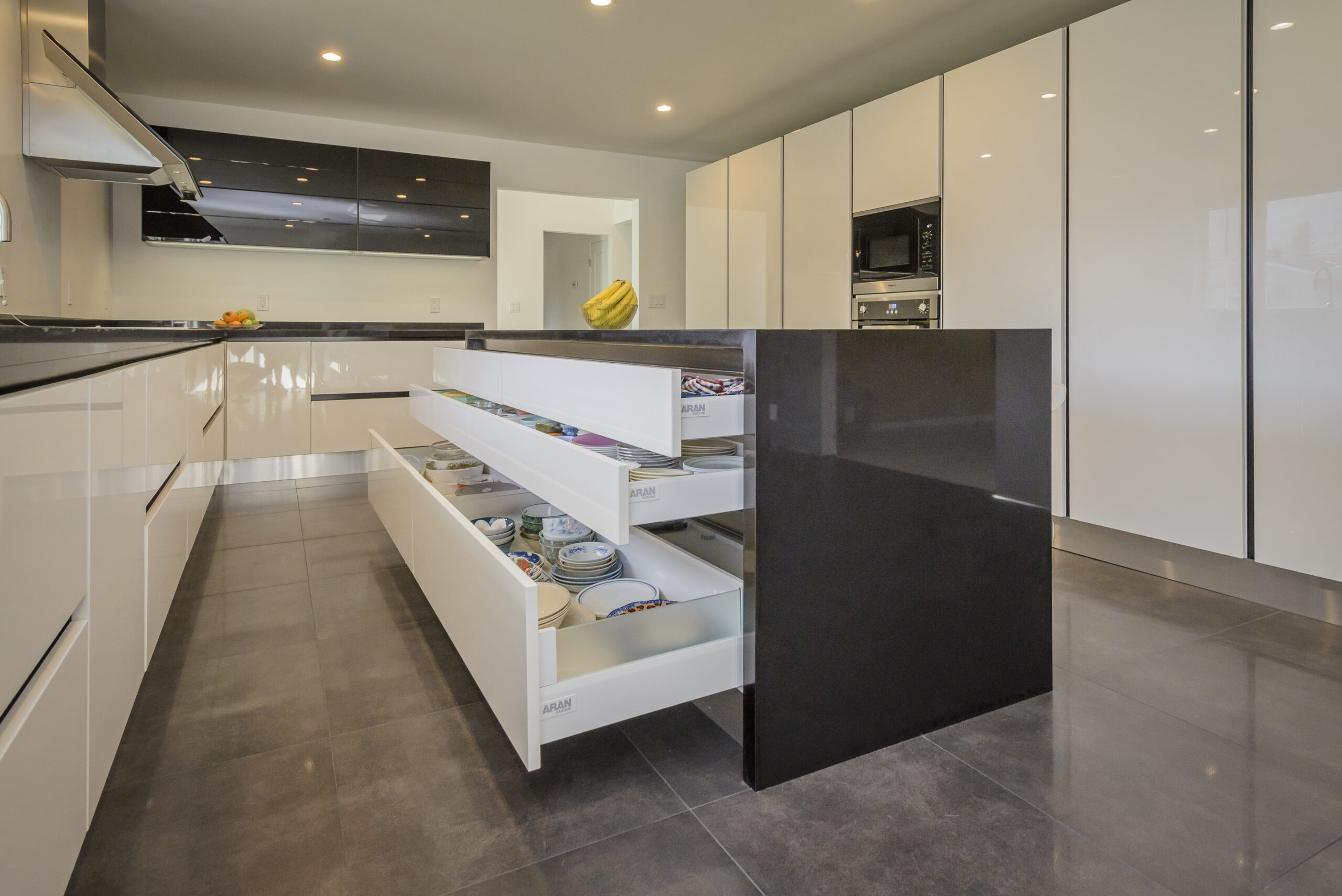
Storage is another major difference.
Because frameless cabinets remove the front frame, they usually allow better access to the cabinet interior. Drawers can be slightly wider, and the usable opening is less restricted. This is one reason many homeowners choose European kitchen systems for smaller or highly functional kitchens.
Italian and European cabinets also often include organized internal systems, such as pull-out pantry units, deep drawers, drawer dividers, lift-up wall units, integrated waste systems, and concealed appliance storage.
American cabinets can also offer excellent storage, especially when custom-built. The difference is that storage planning may depend more on the cabinetmaker or designer. With European systems, many functional storage accessories are part of the cabinet line itself.
For a remodel, this matters. A kitchen can look beautiful and still be frustrating if the storage does not match how the household actually cooks, shops, and uses the space.
Materials and Finishes
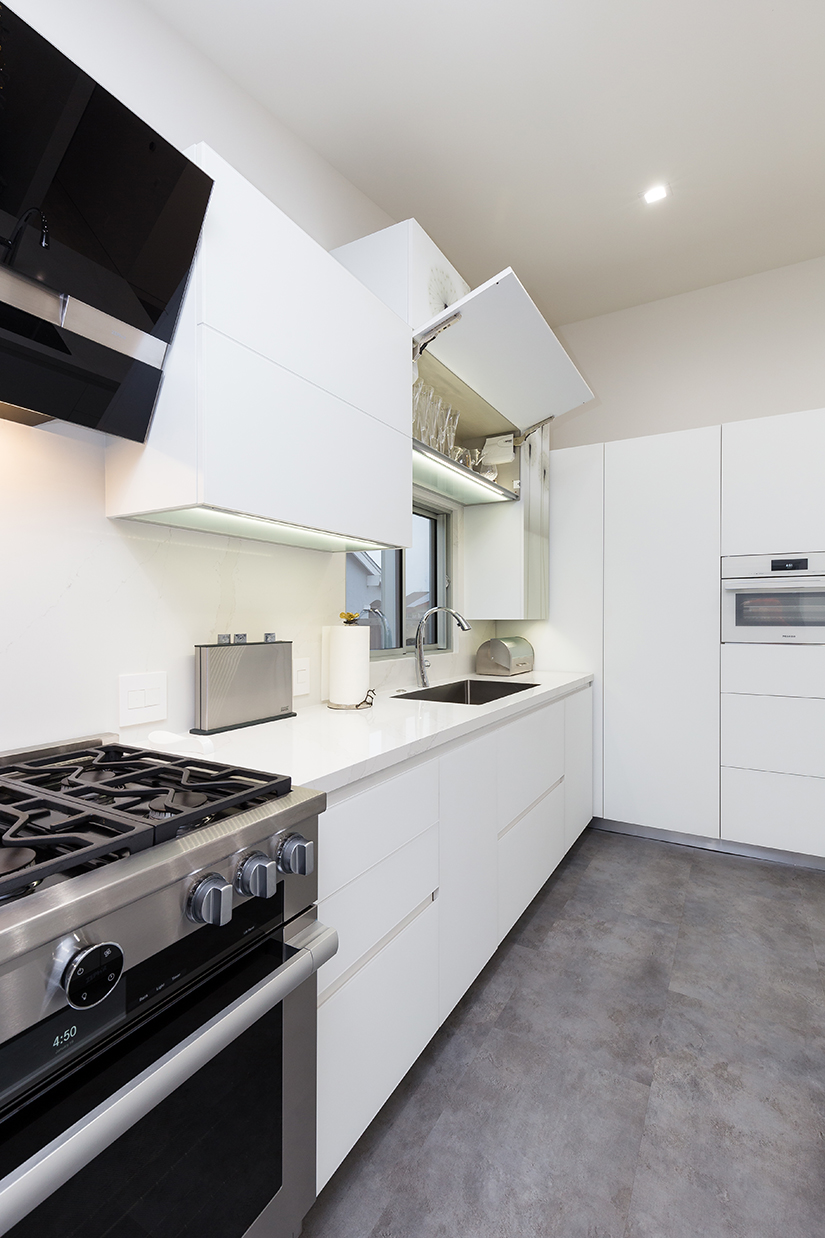
Italian and European cabinets are often known for advanced finish options. These may include matte lacquer, high-gloss lacquer, textured laminate, wood veneer, glass, metal, stone-look surfaces, and mixed-material doors.
The advantage is consistency. Factory-produced cabinet finishes are usually controlled in a precise environment, which can create a cleaner and more uniform result.
American cabinets often use painted wood, stained wood, plywood boxes, hardwood frames, MDF doors, or custom finishes. This can be a good choice if the homeowner wants a handcrafted look or a finish that matches other millwork in the home.
A common misconception is that Italian cabinets always use ‘better materials’ or that American cabinets are always ‘solid wood.’ That is not accurate. Both categories can include premium and lower-quality options. The real question is the specific product line, construction method, finish durability, and installation quality.
Cost and Project Timeline
Cost depends on the brand, cabinet line, finish, layout, hardware, appliances, and installation complexity.
Italian and European cabinets are often positioned as luxury kitchen cabinets, especially when they come from high-end manufacturers with premium finishes and integrated systems. They may have a more structured design and ordering process because the components are planned and manufactured as a system.
American cabinets can range from affordable stock cabinets to very expensive custom cabinetry. A fully custom American kitchen can become costly if there are many special sizes, custom finishes, decorative details, and field changes.
The timeline also depends on the process. European cabinets usually require careful planning before production, because changes after ordering can be harder. American custom cabinets may allow more local flexibility, but timelines can shift depending on the shop, labor schedule, and finish work.
So the better choice is not simply the cheaper one. It is the one that gives the right balance of design quality, function, timeline control, and long-term value.
Which Cabinet Style Is Better for a Modern Remodel?
For a modern remodel, European and Italian cabinets usually have the stronger design advantage. They work well when the goal is a clean, architectural kitchen with integrated appliances, full-height storage, flat doors, and refined finishes.
For a traditional or transitional remodel, American cabinets may be the better fit. They can support Shaker doors, inset construction, painted finishes, and decorative trim in a way that feels more connected to classic American interiors.
But there is overlap. Some American cabinet lines offer frameless construction. Some Italian kitchens can include warm wood finishes and softer design details. The categories are useful, but they should not be treated as rigid rules.
Final Thoughts
The difference between Italian kitchen cabinets and American cabinets comes down to more than style. Italian cabinets are often part of the wider world of European kitchen cabinets, with frameless construction, clean lines, modern finishes, and system-based planning. American cabinets often lean toward framed construction, traditional detailing, and more custom flexibility.
If you want a modern, refined kitchen with efficient storage and a more architectural look, European or Italian cabinetry may be the stronger direction. If you want classic, decorative, or highly traditional kitchen cabinets, American cabinetry may be a better fit.
At European Cabinets & Design Studios, we specialize in Italian cabinetry systems designed for high-end remodels, custom homes, and homeowners who want a more streamlined, architectural kitchen.
Not sure which cabinet style is right for your remodel? Visit our Palo Alto showroom to compare European kitchen cabinets, modern Italian finishes, storage systems, and framed vs frameless construction in person. Our team can help you choose the right direction for your home, style, and project goals.